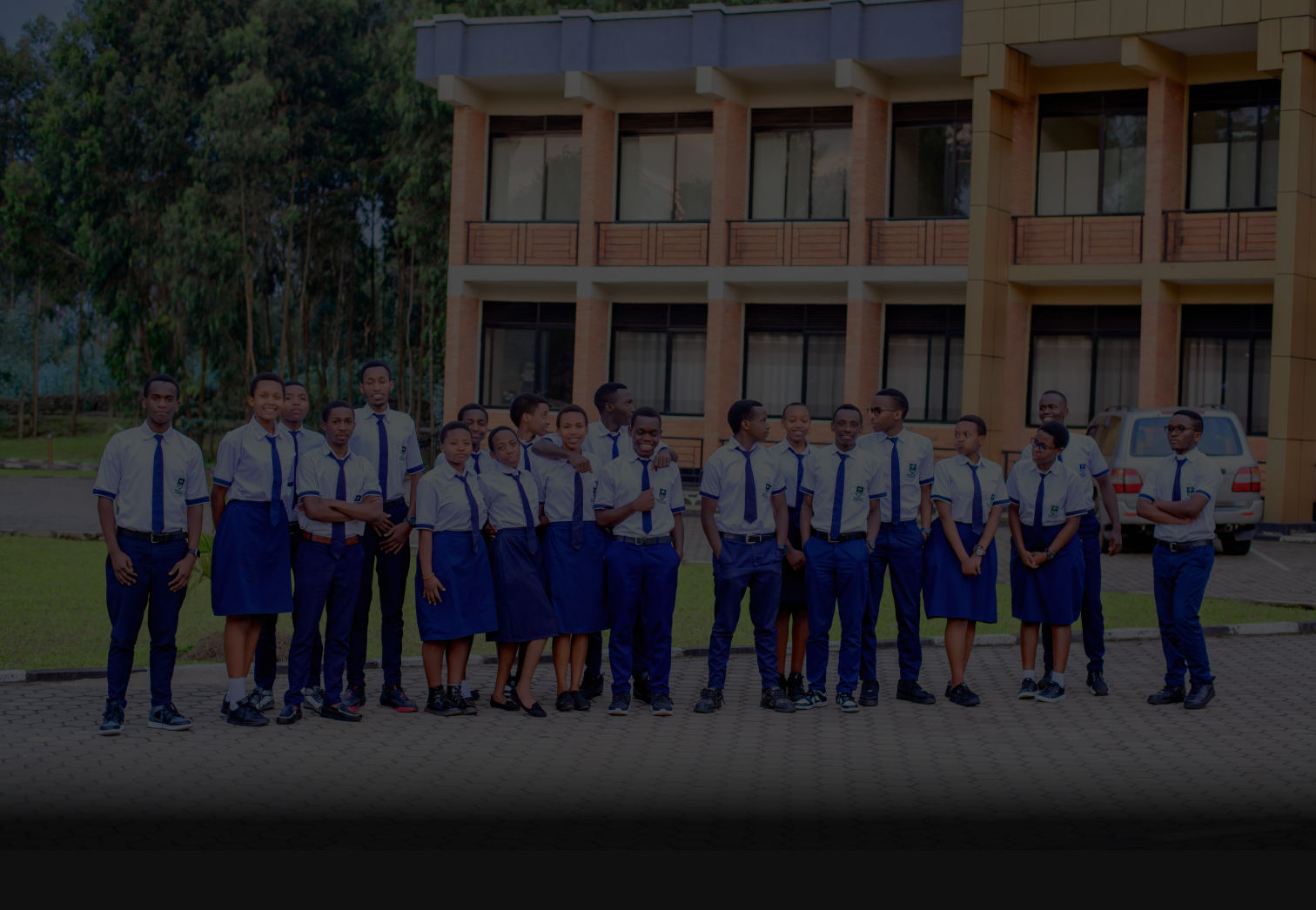
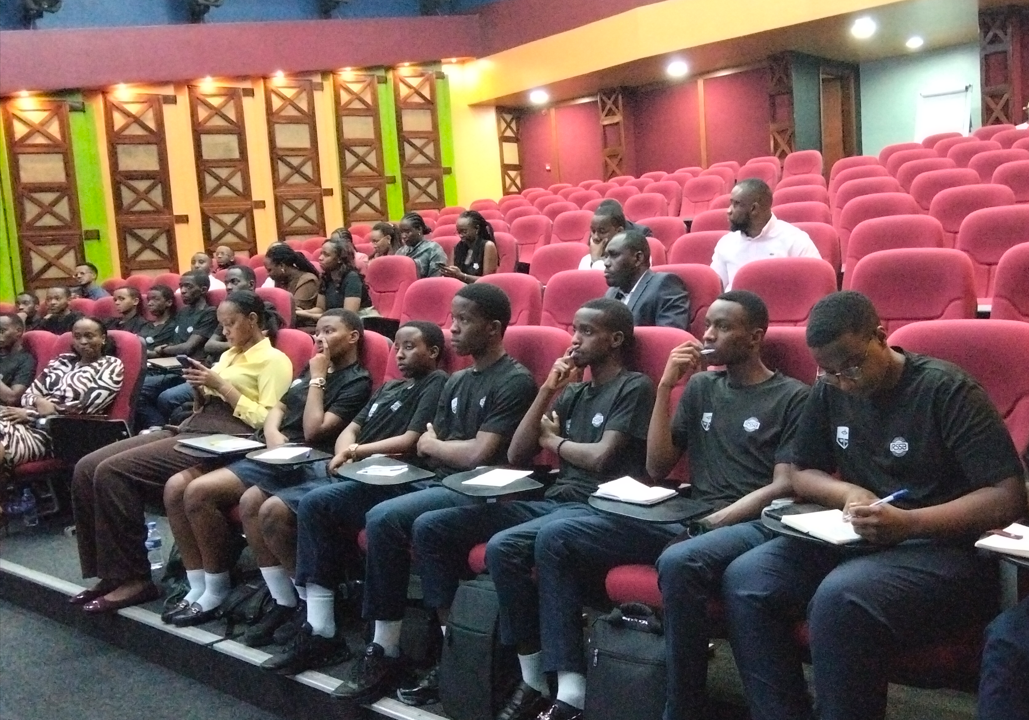
On the morning of May 7, 2026, a delegation of students from the Rwanda Coding Academy (RCA), accompanied by their instructors Louis Mukama and Aphrodice Rwagaju, along with their Principal, Dr. Papias Niyigena, paid an industry visit to the Rwanda Social Security Board (RSSB) headquarters. The delegation arrived at 9:00 AM and was warmly welcomed by the RSSB team. Following a shared breakfast, the students were formally received and ushered into a day that had been thoughtfully structured to offer deep exposure to RSSB's work, culture, and ongoing digital transformation journey.
The first order of business was a keynote address from RSSB's Deputy CEO, Louise Kanyonga, who set an encouraging and motivational tone for everything that followed. She took a moment to acknowledge the growing contribution of RCA students to Rwanda's technology ecosystem, commending their role in the country's broader digital development. She then explained the strategic thinking behind RSSB's deliberate choice to build its digital systems using homegrown Rwandan developers rather than outsourcing to foreign firms, a decision rooted in national pride, sustainability, and long-term capacity building. She closed with a message that landed squarely with the room: while artificial intelligence continues to evolve at pace, human innovation remains irreplaceable, and the students must work hard to ensure they are ready to seize every opportunity that comes their way.
Dr. Papias Niyigena then took the floor to introduce RCA to the RSSB team. His presentation offered a comprehensive 360-degree view of the academy, covering its curriculum, the range of projects students have worked on, and the philosophy that defines how the school operates. He also walked the RSSB team through the various learning facilities available at RCA, showcasing the environments and resources that shape the students' technical and professional development. It was a moment that clearly impressed the hosts, painting a vivid picture of the calibre of talent the academy is steadily producing for Rwanda and beyond.
The RSSB staff then introduced themselves to the students, with several sharing candid reflections on their day-to-day professional lives. Among those who spoke were Product Owners, the Head of Engineering, and members of the Human Resources team. They also gave the students a brief introduction to RSSB's core schemes, namely the Pension Scheme, RAMA, CBHI, Occupational Hazards Insurance, the Maternity Leave Scheme, and EjoHeza, offering the students a broad sense of the organisation's mandate and the millions of lives it serves across Rwanda.
After the introductions, the RSSB team walked the students through several of the organisation's flagship digital products, including CBHI, RAMA, Umusanzu, and a number of other active projects. Each was unpacked in detail, from its core functionality and intended impact to the technology that powers it. For the students, it was a rare and valuable window into large-scale product development in practice, connecting classroom theory to real-world application in the most direct way possible.
After a brief five-minute break, the atmosphere shifted into something more dynamic. The students were presented with a Digital Factory Challenge, a real problem to solve in just fifteen minutes, culminating in a group presentation. The exercise tested their ability to think quickly, collaborate under pressure, and communicate ideas with clarity and confidence. They delivered, and their responses were thoughtful, creative, and well-presented, earning visible appreciation from the RSSB team watching on.
The panel discussion that followed, moderated by RCA student Nezerwa Princess, featured Susan from RSSB's Human Resources team and Silvie Sangwa, a Product Owner at RSSB. Susan revealed that a CV earns her attention when the key requirements appear on the very first page, and urged students to apply for opportunities early, as talent pools fill up faster than most people expect. Silvie, speaking from her own journey, made a compelling case for personal branding, arguing that in a room full of equally skilled candidates, how you market yourself is often the deciding factor. Both were asked what they would do differently if they were 21 again, and Susan's answer was telling: she would have started building her own enterprise far sooner rather than beginning in employment.
Students and RSSB employees then came together over lunch in an atmosphere that was informal but no less valuable. Conversations flowed freely as students seized the chance to network, ask questions, and gather personal advice from professionals across different departments, the kind of organic, human connection that no lecture or structured session can replicate.
To round off the day, the RCA delegation made their way to the RSSB offices at Norrsken House. Before meeting the team, the students were given a brief but illuminating overview of the Norrsken Foundation, its origins, mission, vision, and its broader contribution to fostering innovation and entrepreneurship across Africa. They were then introduced to the RSSB team based there, including the Senior Solution Manager, who offered further insight into the organisation's ongoing digital work. The visit closed with a tour of the space, and the delegation made their way home inspired, energised, and carrying with them a renewed sense of purpose. It was, by every measure, a marvellous day.
